U.S. Geopolitical Leverage and the War on Brazilian Cartels
September 24, 2026 - 12:30 pm
Segal Theatre
The Graduate Center, CUNY
This past June, the U.S. government used America’s broad anti-terrorism laws to designate two of Brazil’s largest criminal drug cartels – Premeiro Comando da Capital (PCC) and Comando Vermelho (CV) – as foreign terrorist organizations (FTOs). Because both PCC and CV deeply penetrate numerous financial and industrial sectors in Brazil, and the Brazilian economy is the largest in Latin America and the tenth largest in the world, that strategy will likely have an unprecedented impact on U.S.-Brazilian business relations, Brazil’s domestic politics, and global supply chains. The speakers will draw on their experience as practicing Brazilian lawyers and cultural observers to discuss these geopolitical developments.
The US decision to designate PCC and CV as Foreign Terrorist Organizations is not merely a symbolic gesture. It projects American regulatory power directly into the Brazilian economy and creates a new item in the agenda of both countries. Multinational companies operating in Brazil now face a new kind of exposure, one that has little to do with corruption or unfair competition, and instead involves terrorism financing, a terrain that had no prior general attention in Brazil’s regulatory experience. Legally, the designation is narrow in scope, tied specifically to these two organizations under principles of legality and restrictive interpretation in criminal law, but its practical reach is far broader, extending into trade flows, M&A due diligence, and how companies across sectors assess their exposure to organized crime in Brazil. And the timing could hardly be more sensitive: this measure arrives amid an already strained U.S.-Brazil relationship, amplifying its political and strategic weight well beyond the regulatory dimension.
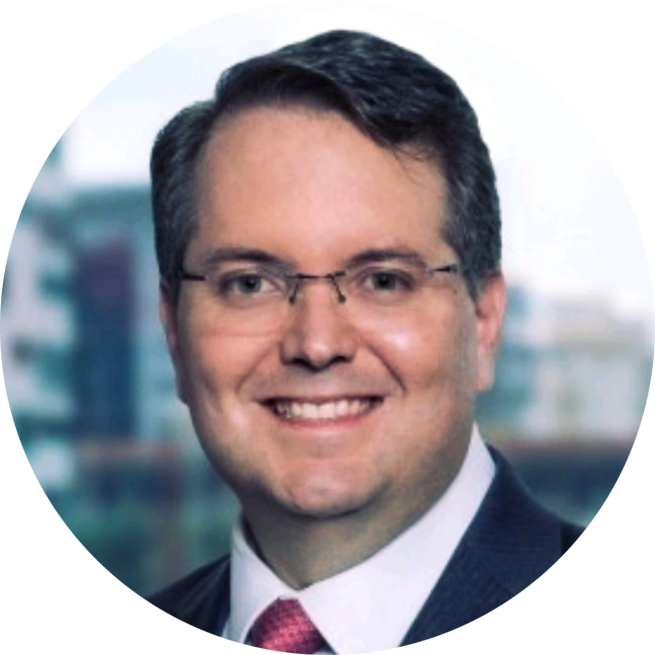
Ricardo Inglez de Souza is Managing Partner at Broadfield. His practice focuses on competition law, compliance, and international trade, advising national and multinational companies on strategic investigations, crisis management, and complex regulatory matters. He is a professor of Commercial Law at Fundação Armando Álvares Penteado (FAAP) and the Catholic University of Chile, and a guest professor at other institutions. Inglez de Souza is vice president of the Commission on Competition and Economic Regulation Studies of OAB-SP and a member of the Brazilian Institute of Competition, Consumption, and International Trade Studies (IBRAC). He was named among the world’s leading competition law practitioners under 40 by Global Competition Review’s “40 Under 40” ranking and has been recognized in Chambers and Partners, Latin Lawyer, Who’s Who Legal, LACCA, Best Lawyers, and Análise Advocacia. He is the author of the book The Dogma of Cartel and the Selectivity of Brazilian Competition Law.
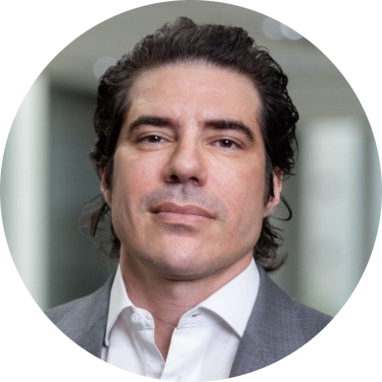
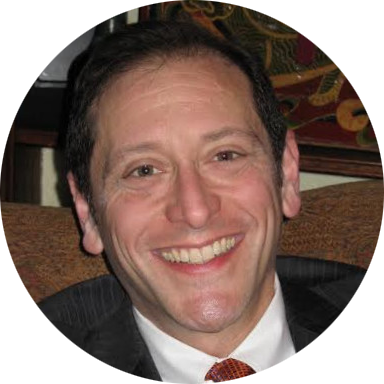

Enrique Desmond Arias is the Director of the Bildner Center for Western Hemisphere Studies and a Professor at the Graduate Center, CUNY. He is the Austin W. Marxe Professor of Western Hemisphere Affairs at Baruch College. Arias is the author of several influential books, including Criminal Enterprises and Governance in Latin America and Drugs and Democracy in Rio de Janeiro. His research has been published in major journals like Comparative Politics and Political Geography, and has been supported by organizations such as the National Science Foundation. He has also served as a consultant for the United Nations and the Ford Foundation.
Moderator: Enrique Desmond Arias, The Graduate Center/ Baruch College, CUNY
TO REGISTER send email to bildner@gc.cuny.edu