Retaking the Security Agenda in Latin America
September 21, 2026 - 4:00 pm
Skylight Room
The Graduate Center, CUNY
In English and Spanish | Interpretation provided via Zoom*
Too many current political discussions start from the premise that protecting populations from violence requires restricting rights or eroding checks on executive power. This side event will challenge that premise by demonstrating how states and civil society can deliver tangible, short-term improvements in citizen security without sacrificing civic space or accountability, with a focus on recent experiences in Latin America.
While there is no substitute for long-term security sector reforms for making people safer, the short term matters too. Across the Americas, governments and civil society are delivering short-term security gains while upholding rights and democracy. This event will highlight some of those unheralded successes.
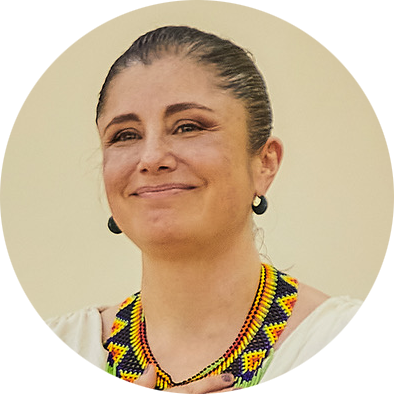
Iris Marín Ortiz is the Human Rights Ombudsperson of Colombia (Defensora del Pueblo), elected in August 2024 for the 2024-2028 term as the first woman to lead the institution in its 35-year history. A constitutional lawyer and expert in transitional justice, peace, and human rights, she previously served as auxiliary magistrate at the Constitutional Court, the Special Jurisdiction for Peace (JEP), the Truth Commission, and the Victims’ Unit. Earlier in her career, she worked for the Colombian Commission of Jurists, led reparations policy at the Unit for Attention and Reparation of Victims, advised UN Women-Colombia on justice and gender, and supported the Colombian government’s delegation on reparations during the peace negotiations with the FARC. She has also worked with the Center for the Study of Law, Justice and Society (Dejusticia) and the Consultancy for Human Rights and Displacement (Codhes), and has taught human rights, constitutional law, gender equality, and transitional justice at several Colombian universities.
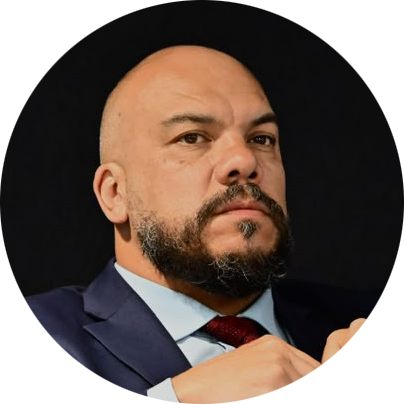
Eduardo Vergara is the Chief of the Citizen Security Division and the Alliance for Security, Justice and Development at the Inter-American Development Bank (IDB). He leads initiatives focused on violence prevention, institutional strengthening, and protection of vulnerable populations across Latin America and the Caribbean. Vergara is a political scientist with over 15 years of experience in public security policy, drug policy, and organized crime. Prior to joining the IDB, he served as the Vice Minister for Crime Prevention in Chile’s Ministry of the Interior, where he led national strategies to combat crime and violence.


Enrique Desmond Arias is the Director of the Bildner Center for Western Hemisphere Studies and a Professor at the Graduate Center, CUNY. He is the Austin W. Marxe Professor of Western Hemisphere Affairs at Baruch College. Arias is the author of several influential books, including Criminal Enterprises and Governance in Latin America and Drugs and Democracy in Rio de Janeiro. His research has been published in major journals like Comparative Politics and Political Geography, and has been supported by organizations such as the National Science Foundation. He has also served as a consultant for the United Nations and the Ford Foundation.
Opening Remarks: Enrique Desmond Arias, The Graduate Center/ Baruch College, CUNY
Moderator: Carolina Jiménez Sandoval, President, WOLA
TO REGISTER send email to bildner@gc.cuny.edu